Overview
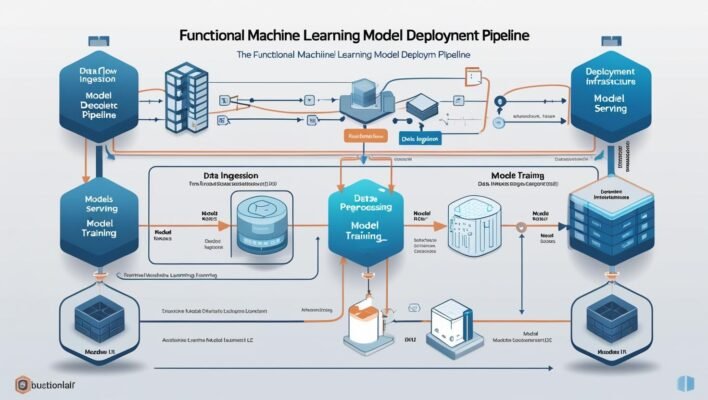
The ML Model Deployment Pipelines developed by Galific Solutions lay a solid foundation for streamlining the process from experimentation to the real world. However, very few companies succeed at the deployment stage. Hence, you need a model that passes the most critical phase.
So, it’s an immense pleasure for us to help deploy models successfully through a structured and encrypted pipeline. Our team of experts continuously monitors the models to ensure smooth functioning across all platforms.
What We Deliver
- CI/CD Pipelines for Machine Learning.
- Model packaging (Docker, ONNX, etc.)
- Rollbacks, A/B testing, and version control
- Auto-monitoring and performance alerts
- Integration with AWS, Azure, GCP, or on-prem
Our ML Model Deployment Pipelines Services
- Customized Pipeline Architecture Designs – Tailored deployment pipeline frameworks for different ML problem types (classification, regression, time-series, etc.)
- Model Packaging and Containerization – Using Docker, Conda, or virtual environments to package models for reproducibility and portability.
- CI/CD for ML(MLOps Integration) – Automating testing, validation, and deployment processes to support continuous updates and version control.
- Performance Monitoring & Logging – End-to-end observability tools for latency, accuracy, throughput, and error handling with Grafana, Prometheus, or custom dashboards.
- Drift Detection and Alerting Systems – Real-time alerts for data drift, concept drift, or model degradation to ensure consistent performance.
Industries We Support
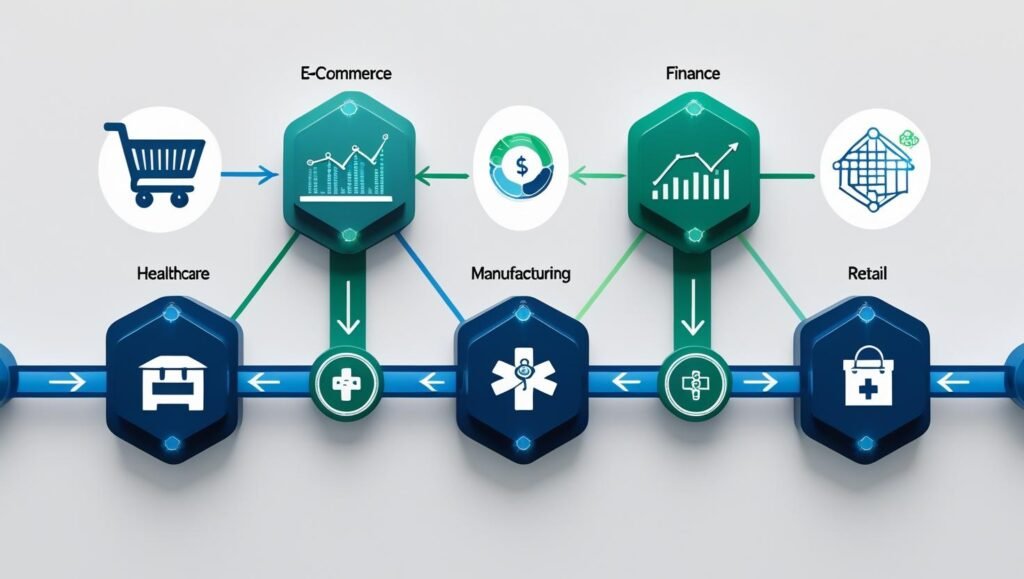
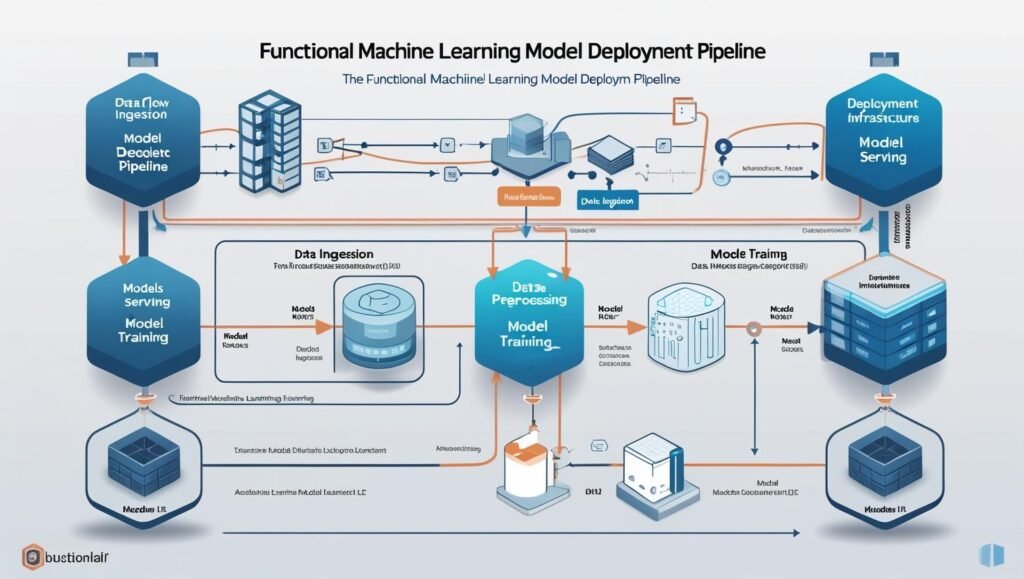
ML Model Deployment Pipeline in E-commerce
In the e-commerce industry, staying competitive requires agility and personalisation. Hence, in the fast-paced world of e-commerce, it’s essential to keep up with customer expectations. For example, personalization, speed, and seamless experiences are the all-time high aspects for customer delight and retention. Hence, you need ML model deployment pipelines to empower e-commerce businesses to meet these demands via automated decision-making in real-time. Regardless of personalized product recommendations, dynamic pricing strategies, or inventory forecasting, our pipelines provide valuable insights into user behavior and transactional data required to drive conversions and enhance customer loyalty.
How we help
- To begin with, Galific enables personalised recommendations through real-time models that adapt based on user activity.
- In addition, dynamic pricing models adjust prices using real-time demand, inventory, and competition data.
- Moreover, customer segmentation models enable the automation of real-time audience clustering for targeted promotions.
- Ultimately, churn prediction models identify potential drop-offs and trigger targeted retention actions.
Result:
- Increases conversion rates by up to 30% and boosts order values.
- Improves profit margins and sales agility.
- Enhances email engagement and marketing ROI by 25%.
- Lowers churn by 15–20% through timely interventions.
ML Model Deployment Pipeline in Finance
In the finance sector, speed, trust, and compliance are mission-critical. Therefore, the finance industry operates in a data-intensive and highly regulated environment where precision, security, and speed are critical. Hence, the implementation of ML model deployment pipelines proves to be useful for financial institutions, enabling them to streamline fraud detection, automate credit scoring, and optimize trading strategies by delivering real-time intelligence. Furthermore, these pipelines ensure that predictive models remain updated, interpretable, and compliant, enabling smarter risk assessment and operational efficiency without compromising trust or regulatory requirements.
How we help
- Firstly, we deploy fraud detection models that instantly flag abnormal transactions.
- Similarly, our credit scoring models assess risk using dynamic customer data.
- Furthermore, we continually update our algorithmic trading models to counter market shifts.
- Thus, regulatory compliance models maintain explainability, fairness, and audit-readiness.
Results:
- Prevented losses with up to 90% fraud detection accuracy.
- Reduced loan processing time by 70% while improving risk accuracy.
- Optimized trade execution and portfolio performance.
- Simplified reporting and ensure alignment with evolving standards.
ML Model Deployment Pipeline in Manufacturing
In manufacturing, ML model deployment pipelines enable predictive intelligence across processes. To reduce waste and increase productivity, contemporary manufacturing relies on intelligent automation. Therefore, you need our pipelines to allow factories to integrate predictive maintenance, quality control, and supply chain optimization into their daily operation. As a result, these pipelines enhance overall efficiency. Additionally, analyzing sensor data and operational metrics in real-time enables manufacturers to minimize downtime, detect defects early, and make informed decisions that align with their production goals.
How we help
- Integration of predictive maintenance models to monitor machine sensors to detect failure signs.
- Utilize computer vision to assess product defects in real-time.
- Helps predict demand and align inventory with production schedules.
- Analyze usage patterns and recommend improvements to enhance efficiency.
Results:
- Minimizes downtime by 30–50% and prevents costly breakdowns.
- Enhances accuracy and reduces manual inspection errors by 40%.
- Cuts logistics costs and improves on-time delivery.
- Lowers energy costs by 10–20%.
ML Model Deployment Pipeline in Healthcare
In the healthcare domain, there’s a demand for timely, accurate, and data-driven decisions to enhance a patient’s chances of recovery. Hence, it’s essential to improve operational efficiency. Therefore, you need our ML Model deployment pipelines that support clinical decision-making and patient care.
Furthermore, ML model deployment pipelines are transforming care delivery by supporting real-time diagnostic imaging, patient risk prediction, and treatment personalization. Thus, our pipelines enable healthcare providers to integrate AI models into clinical workflows, ensuring continuous learning from new patient data while maintaining transparency, safety, and compliance with medical standards.
How we help
- Deploy diagnostic imaging models to aid radiologists in detecting anomalies
- Sending real-time alerts for possible health deterioration or readmission.
- Recommending the best-suited care paths for each patient.
- Streamline admin tasks, documentation, and triage.
Results
- Improves diagnostic speed by 50% and increases detection accuracy.
- Reduces readmissions and enhances proactive care.
- Boosts treatment effectiveness and patient trust.
- Saves clinicians 2–4 hours daily, improving productivity.
ML Model Deployment Pipeline in Retail
In the retail industry, customer satisfaction depends on timely insights and agile operations. Therefore, it is crucial to stay competitive in retail. Furthermore, it would also need spontaneous responses to market dynamics. In such cases, there is a need for deployment pipelines for ML models. Our pipelines enable real-time decision-making for personalized marketing, inventory forecasting, and analyzing customer behavior. Regardless of whether it’s online or in-store, the pipelines help retailers transform historical and real-time data into actionable insights, thereby enhancing the shopping experience, reducing waste, and improving overall sales performance.
How we help
- Deploy inventory forecasting models that use demand patterns and seasonality.
- Analyze purchase intent and predict future actions.
- Use heatmap and path data to redesign in-store flows.
- Helps determine the right offers for each customer interaction.
Frequently Asked Questions
Q1. What do you mean by ML model deployment pipeline?
In short, ML Deployment Pipelines refer to a structured process that moves models from development to production. In other words, the tool bridges the gap between trial and error and real-world business applications.
Q2. Can you perform ML model deployment pipelines on my existing cloud setup?
Overall, we can deploy ML model pipelines on your existing cloud setup. The tools we use are: AWS, Azure, GCP, and on-premise setups via Kubernetes, Docker, or serverless functions.
Q3. How is the performance of a model monitored after deployment?
To ensure consistent performance, we utilize real-time dashboards and alerts that track key metrics, including drift, latency, and accuracy. As a result, you will be notified when the performance drops or when there is a change in data.
Q4. If I decide to update the model at a later stage, what is the process for doing so?
If you decide to update the model at a later stage, our ML Model Deployment Pipelines guarantee a seamless process. In particular, our pipelines support model versioning, which provides an option for rolling out updated models without disrupting your system’s work. , enabling seamless rollouts of updated models with rollback options if needed.
Q5. How do you deal with data privacy and compliance?
We adhere to stringent data handling protocols (GDPR, HIPAA-ready) and build solutions that prevent data leakage outside your secure environment.
Q6. Do I need to learn DevOps skills to manage the pipeline?
Not at all, we provide you with a visual interface or command-line tools through our technical team, who support post-deployment for maintenance and updates.